

US bets on climate friendly farming; experts doubt it is climate friendly enough
By Leah Douglas
April 12, 2024 at 12:00:03 PM
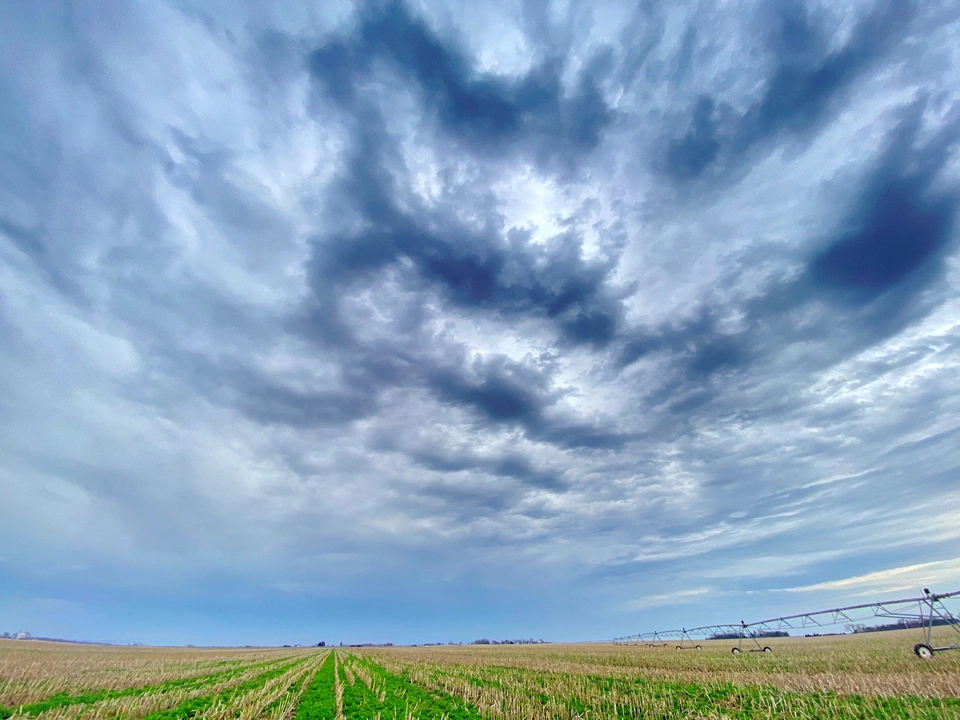
FILE PHOTO: A cover crop of tiller radishes is seen in a corn field in Butler County, Nebraska, U.S. April 6, 2021. Lukas Fricke/Handout via REUTERS/File Photo
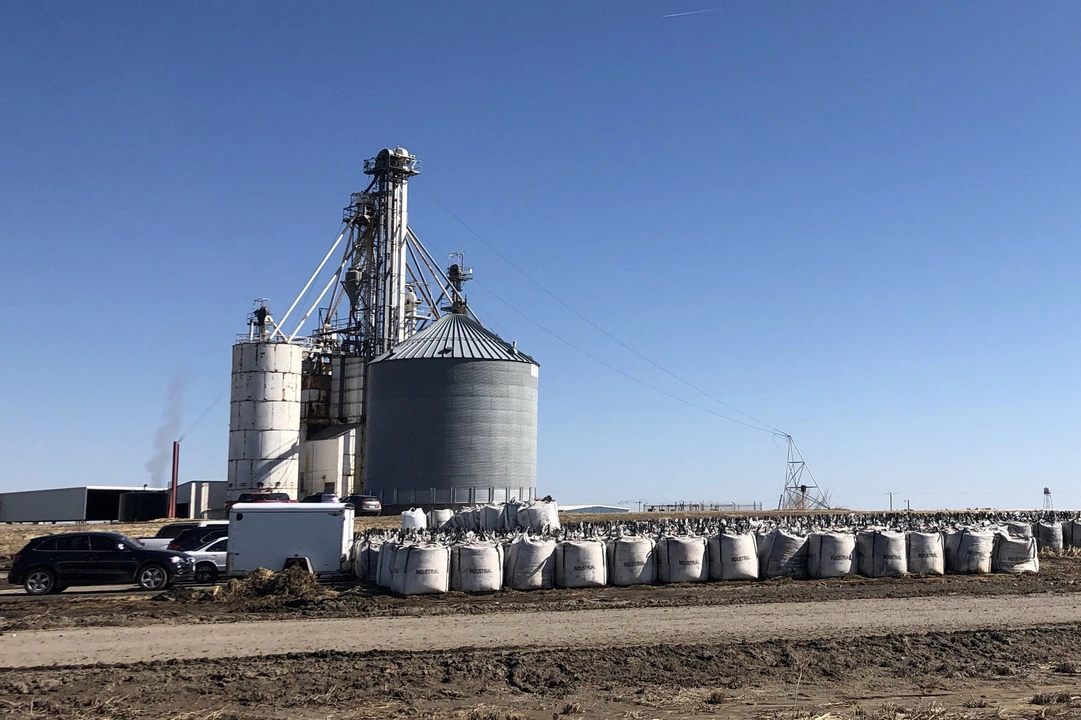
FILE PHOTO: AltEn LLC ethanol plant is seen in Mead, Nebraska, U.S., March 21, 2019. Picture taken on March 21, 2019. REUTERS/Humeyra Pamuk/File Photo

FILE PHOTO: Virgin Atlantic Boeing 787 arrives to complete the first 100% Sustainable Aviation Fuel transatlantic flight from London's Heathrow airport to John F. Kennedy International Airport, in New York City, U.S., November 28, 2023. REUTERS/Brendan McDermid/File Photo
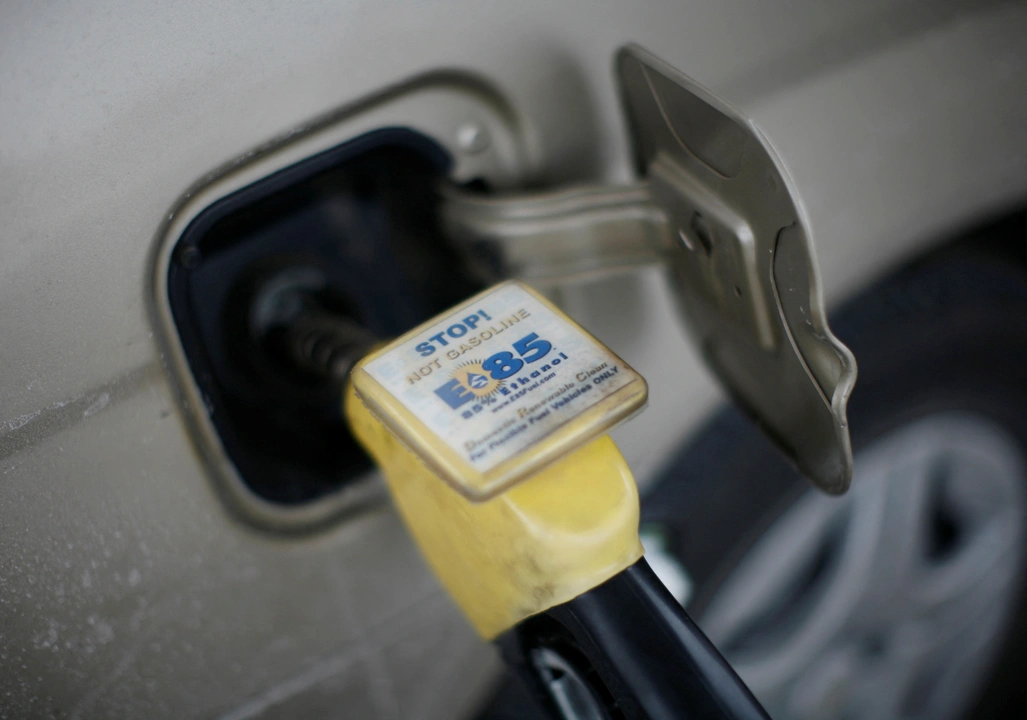
FILE PHOTO: E85 ethanol fuel is shown being pumped into a vehicle at a gas station selling alternative fuels in the town of Nevada, Iowa, December 6, 2007. REUTERS/Jason Reed/File Photo
By Leah Douglas
WASHINGTON (Reuters) - President Joe Biden's administration is offering farmers money for adopting practices that store carbon in the soil to fight climate change, but Reuters interviews with soil science experts and a review of U.S. Department of Agriculture research indicate doubt that the approach will be effective.
Farm practices like planting cover crops and reducing farmland tilling are key to the USDA's plan for slashing agriculture's 10% contribution to U.S. greenhouse gas emissions as the U.S. pursues net-zero by 2050. Ethanol producers also hope those practices will help them secure lucrative tax credits for sustainable aviation fuel (SAF) passed in the Inflation Reduction Act (IRA).
But the farming techniques, which will receive an extra funding boost from Biden's signature climate law, may not permanently sequester much atmospheric carbon in the soil, according to five soil scientists and researchers who spoke to Reuters about the current science.
Four other soil scientists, and the USDA, said the practices can store various amounts of soil carbon, but circumstances will dictate how much and for how long.
The White House referred Reuters to the USDA for comment.
A USDA spokesperson said "the adoption and persistent use of no-till and cover crops are key for the sequestration of carbon on working croplands."
All the experts interviewed by Reuters agreed that no-till and cover crops can have significant environmental benefits such as preventing soil erosion and increasing biodiversity. Yet five of them expressed skepticism about tying climate policy and public money to the practices.
"Will it help with climate adaptation? Absolutely. Should it serve as an offset for more permanent and long-lived pollutants? Absolutely not," said Daniel Rath, an agricultural soil carbon scientist at the Natural Resources Defense Council.
The USDA has spent $1.3 billion in financial assistance to farmers for planting and managing cover crops and $224 million for implementing no-or reduced-till since 2014, according to agency data. That figure is miniscule compared to total USDA spending, but does amount to about 8% of its farm conservation spending in that period.
"If we really want to offset or mitigate climate change, we need to think about different systems," said Humberto Blanco, an agronomy professor at the University of Nebraska-Lincoln. "We need to think about more aggressive strategies."
IT ALL DEPENDS
Adoption of cover crops and no-till has risen in the past decade; now, 11% of farms plant cover crops and about 40% use minimal or no tilling, according to the most recent USDA agricultural census.
Under the right conditions, planting cover crops and reducing tilling can be positive for the climate, scientists told Reuters.
"If a farmer is using cover crops and getting good growth in the fall and spring, and they’re doing minimal tillage, on most soils, they’re going to add soil carbon over time," said Robert Myers, a professor at the University of Missouri and regional director of extension programs at a USDA research site.
A USDA spokesperson said the benefits largely depend on factors like growing climate, soil type, crop rotation, and other factors.
Five other experts told Reuters that no-till farming commonly results in a higher concentration of carbon in the soil surface but a decrease deeper in the soil profile, resulting in a net zero gain.
Seven experts said the climate benefits of no-till and cover crop techniques can be lessened or reversed if farmers plow their fields again.
"Even if you do build up some extra carbon under reduced tillage, if you then do a traditional plowing, the evidence seems to be that you quite quickly lose the carbon that you’ve been building up," said David Powlson, senior fellow at Rothamsted Research, an agricultural research institution.
Only 21% of farmers report using no-till continuously, according to the 2022 farm census, and about a third alternate reduced tilling with conventional tilling, showed a 2018 USDA report.
A USDA standards document for no-till says loss of carbon in the soil is directly tied to the amount and intensity of the tilling, and other factors like soil moisture and temperature.
As for the SAF tax credit, the Treasury Department is expected to finalize details in coming weeks. The $1.25 per gallon credit is aimed at producers who prove their fuel can cut emissions 50% from those of straight jet fuel.
The program will likely require ethanol producers to source corn from farmers using cover crops, reduced tilling, or efficient fertilizer application, sources told Reuters.
The USDA declined to comment on what the fertilizer application would entail.
The ethanol industry hopes to account for a significant portion of the 35 billion gallons of SAF the Biden administration has pledged to produce by 2050.
The IRA includes some $19.5 billion for farm climate programs over 10 years, and in 2023, about $52.5 million of that money went to cover crops and no-till.
(Reporting by Leah Douglas; Editing by David Gregorio)

Reuters is a news agency owned by Thomson Reuters Corporation. It employs around 2,500 journalists and 600 photojournalists in about 200 locations worldwide. Reuters is one of the largest news agencies in the world.

Related Articles


Share News